GREAT recruiting has changed
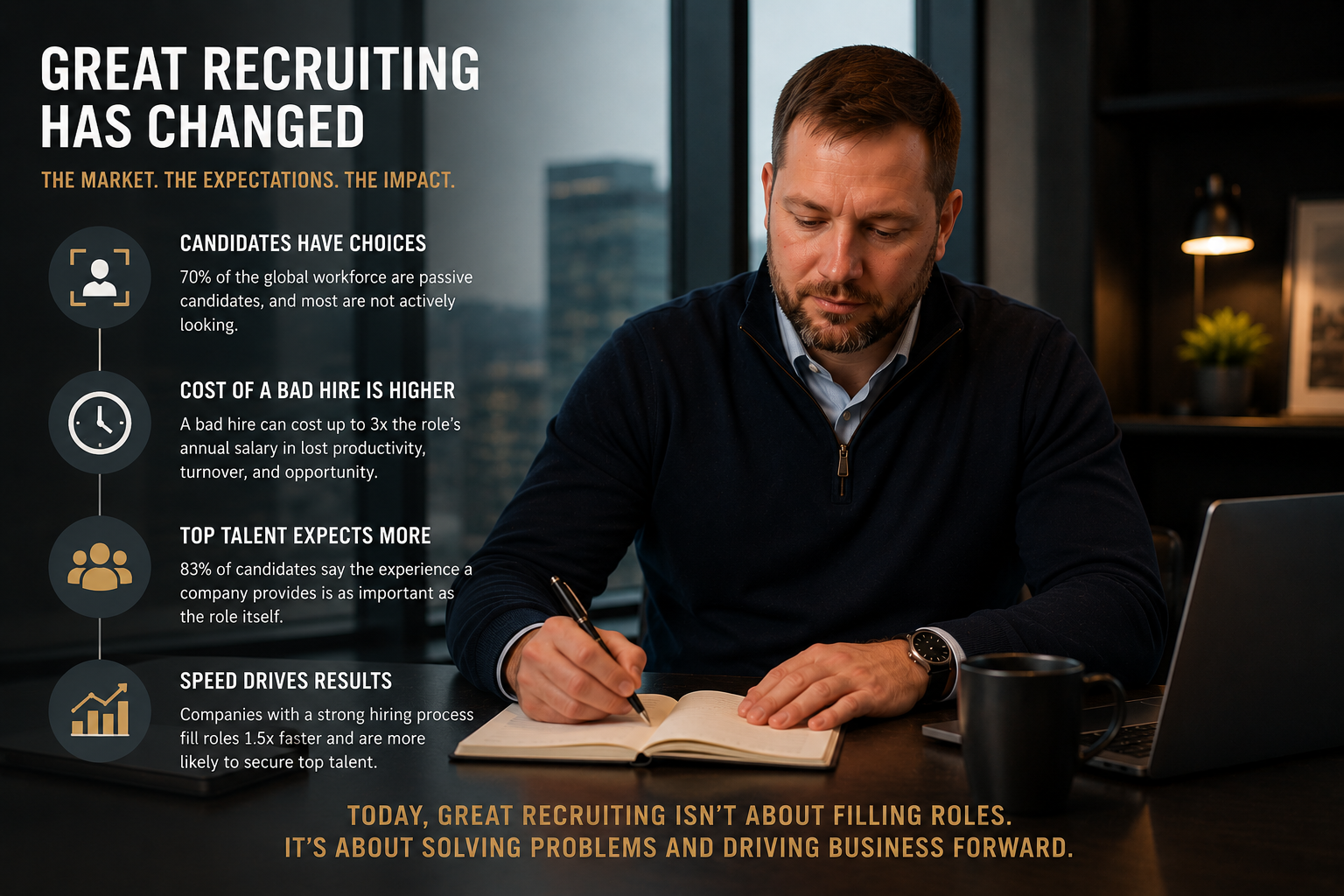
Great recruiting has changed because hiring itself has changed. Ten years ago, companies could post a job, collect resumes, and fill a role through volume. Today, the best candidates are rarely applying. Most are already employed, overloaded with recruiter outreach, and selective about where they engage. At the same time, hiring processes have become slower, more fragmented, and more political, often involving multiple stakeholders without clear alignment on what problem the hire is actually supposed to solve. The result is longer hiring cycles, lower candidate trust, and leadership teams losing time, revenue, and momentum while critical roles stay open.
The best recruiters today no longer operate as resume brokers. They operate as business problem solvers. Great recruiting now requires understanding operational bottlenecks, revenue impact, execution gaps, and leadership priorities before the search even begins. Instead of sending volume, top recruiters deliver a small number of highly aligned candidates who fit both the technical requirements and the business reality behind the role. Candidate experience has also become critical. Strong candidates expect transparency, speed, and relevance. Companies that communicate clearly, move decisively, and evaluate candidates intentionally are consistently outperforming organizations still relying on outdated, transactional hiring models.
The industry has also shifted because technology and AI have changed the market. Sourcing candidates is easier than ever. Building trust is harder than ever. Anyone can generate a list of resumes. Very few can diagnose why a team is struggling, identify the operator who can fix it, and align both sides quickly enough to create real business impact. That is the difference between recruiting activity and strategic recruiting.